

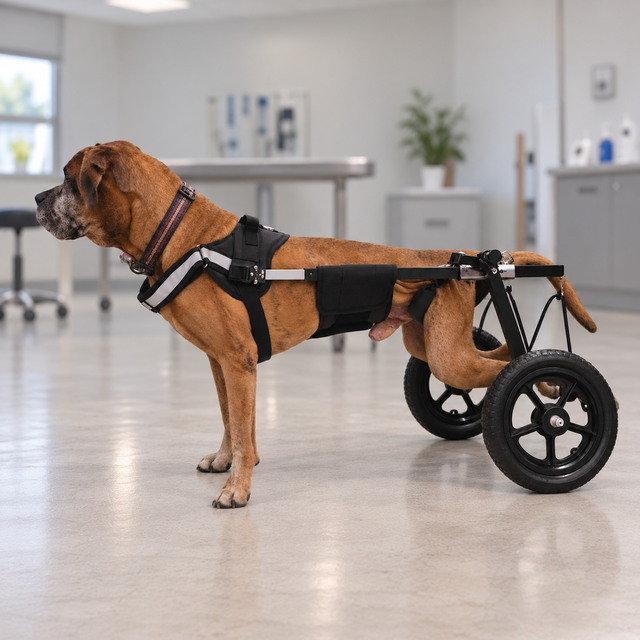
Dog wheelchair
For back legs that cannot take weight
Three sizes, adjustable as she changes.
From ₹12,990
View product →
Built for dogs with weak back legs, from injury, illness, or age. Designed with vets.
Nikki · Indian Spitz · Delhi · running again since April 2026
Trusted by
Figures from Sidekick order records, as of August 2026. Imported rear-support wheelchairs land in India at roughly Rs. 40,000 to Rs. 60,000.
Weak back legs
Weakness in a dog's back legs usually starts in the spine rather than the legs. Your vet may call it intervertebral disc disease (IVDD), degenerative myelopathy (DM) or a spinal stroke. Whichever it is, the front half keeps its strength, and that is what a dog wheelchair runs on.
Early on, a belly support harness can be enough to steady them. As the back end takes less weight, a wheelchair keeps your dog walking, and nerves respond to repetition, so every step is practice. If the back paws turn under, a knuckling brace is worn with the chair so each step lands flat.

After an accident
A road accident or a bad fall can injure the spine, or the nerves running down to the back legs. How much movement comes back varies enormously between dogs, and it often keeps improving for months rather than weeks.
Your vet leads the early days. A rear lift sling helps with the first short walks, and a wheelchair takes over once your dog can be upright for longer, because repeated stepping is how the nervous system relearns the pattern. A knuckling brace protects a paw that has lost its sense of position

Dragging a paw
A knuckling brace encourages you to hold the paw in position so each step can land flat, which protects the skin and teaches a better pattern than a paw that folds under. If both back legs are weakening as well, a wheelchair carries the weight so the practice can continue for longer. A tele-consult can tell you which you need.
A knuckling brace holds the paw in position so each step lands flat. That matters beyond protecting the skin. The nervous system learns the movement it repeats, so a paw that lands properly teaches a better pattern than one that folds under.

Slowing with age
Older dogs lose strength in the back legs gradually, so it is easy to miss until the walks get shorter. Arthritis and hip dysplasia are the usual causes, and stiffness, slipping on smooth floors and hesitating at the stairs are the first signs.
Support does not have to mean a wheelchair straight away. A rear lift sling takes some of the weight on walks, and a belly support harness helps around the house. Muscle and balance are kept by being used, so the aim is to keep your dog walking on their own for as long as possible. A wheelchair comes later, if at all.

Limping on a leg
A dog that suddenly holds up one back leg, or puts the toe down and no more, has most often torn the cruciate ligament in the knee. It is the same injury as a human ACL, and it usually happens in an ordinary moment: a turn at speed, a jump off the sofa. Your vet can confirm it by checking the joint for movement.
Surgery is the usual route and it works well. Where surgery is not the right option, a stifle brace supports the joint so the leg can take weight while the muscle around it does more of the work. A rear lift sling helps with stairs and getting up in the meantime. The brace is also used after surgery, to protect the repair.

Trouble getting up off the ground
Struggling to rise is often the first thing owners notice, and it usually points to the hips and back legs rather than the paws. Hip dysplasia and arthritis are common causes, and smooth floors make it harder.
A rear lift sling gives you a handle to take some of the weight through the push up, and a belly support harness stays on for the day so help is always to hand. Getting up unaided is worth protecting: it is one of the movements dogs lose first and regain last. A tele-consult can tell you whether the cause is strength or pain.

Not sure yet
Every dog's mobility problem is different, and the right answer depends on how much weight they can still carry themselves.
A 20-minute video consult with a qualified pet physiotherapist. They will watch how your dog moves, tell you honestly what will help, and recommend nothing if nothing is needed.
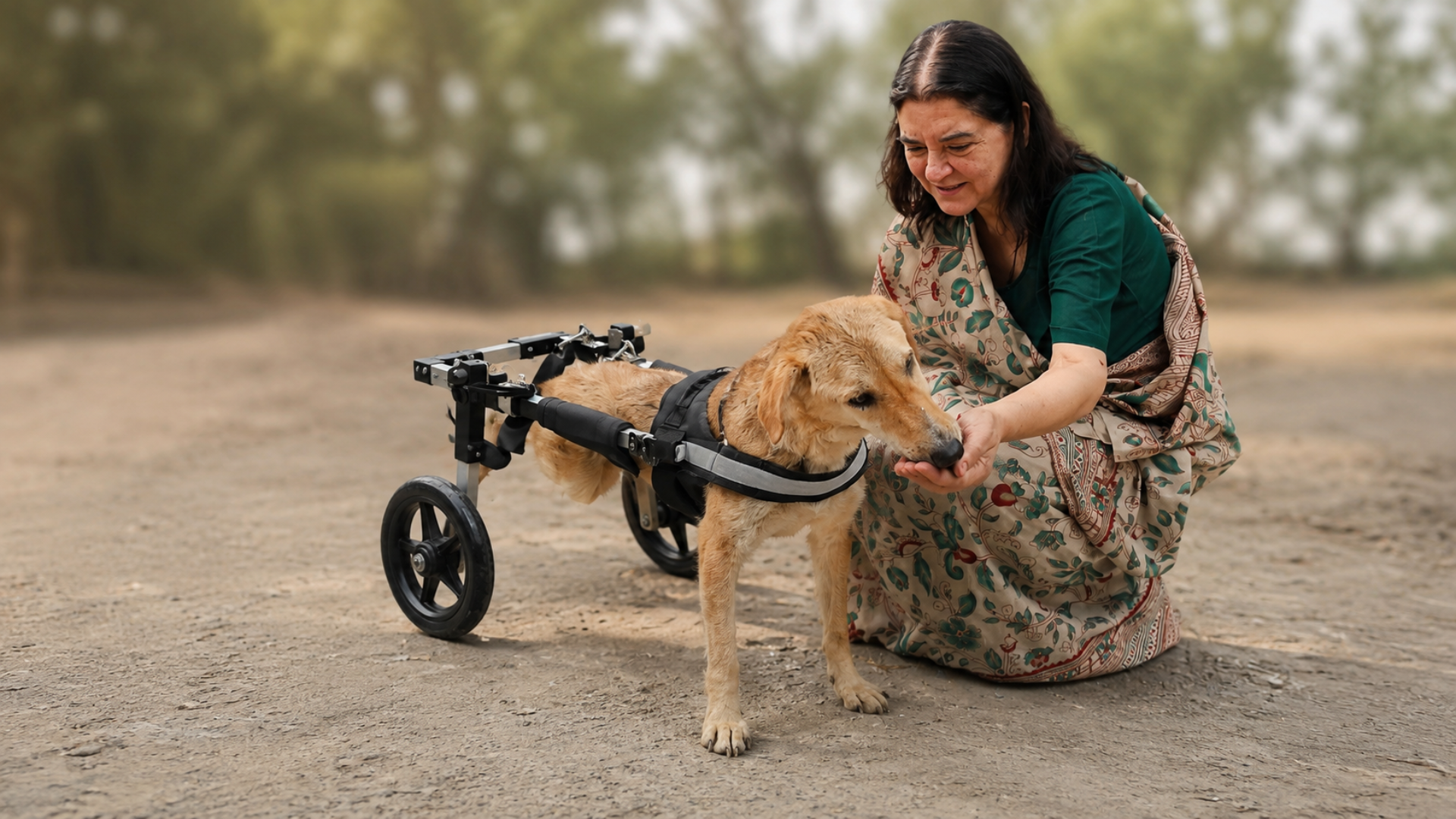
For back legs that cannot take weight
Three sizes, adjustable as she changes.
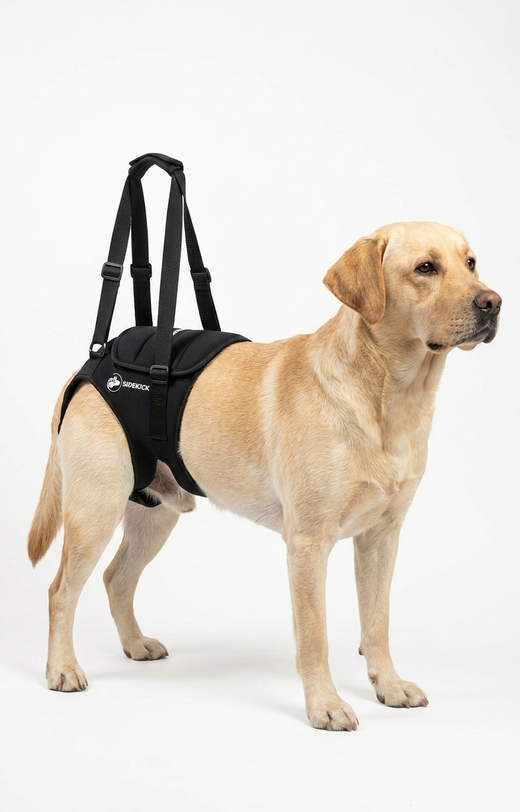
Padded handle, four sizes.
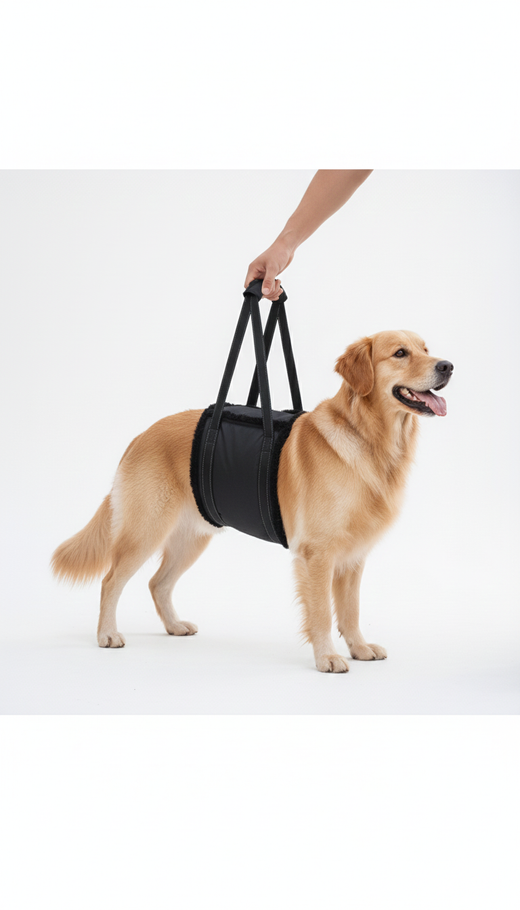
Supports front and rear, washable.
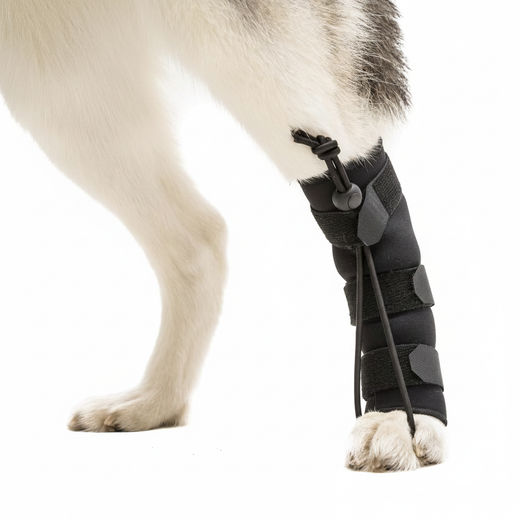
Left or right paw, three sizes.
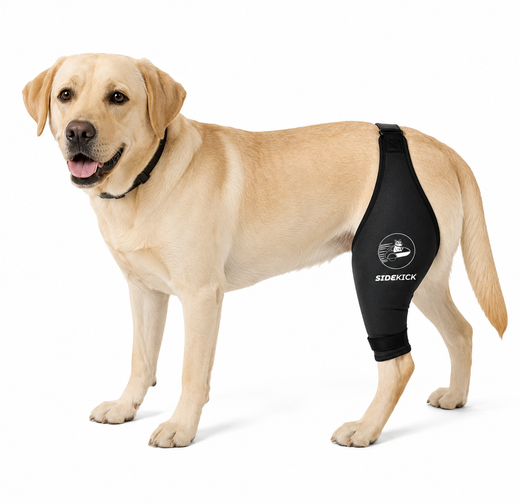
Also called a knee brace.
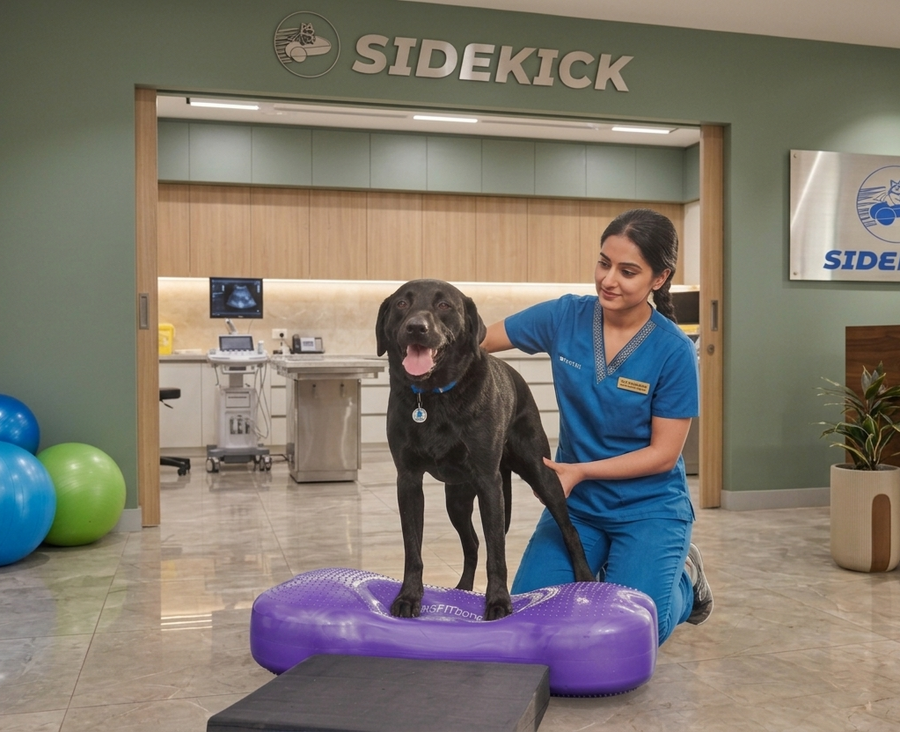
Twenty minutes on video with a qualified pet physiotherapist, who watches your dog move and tells you the one thing to start with.
local wheels at one end, imported at the other
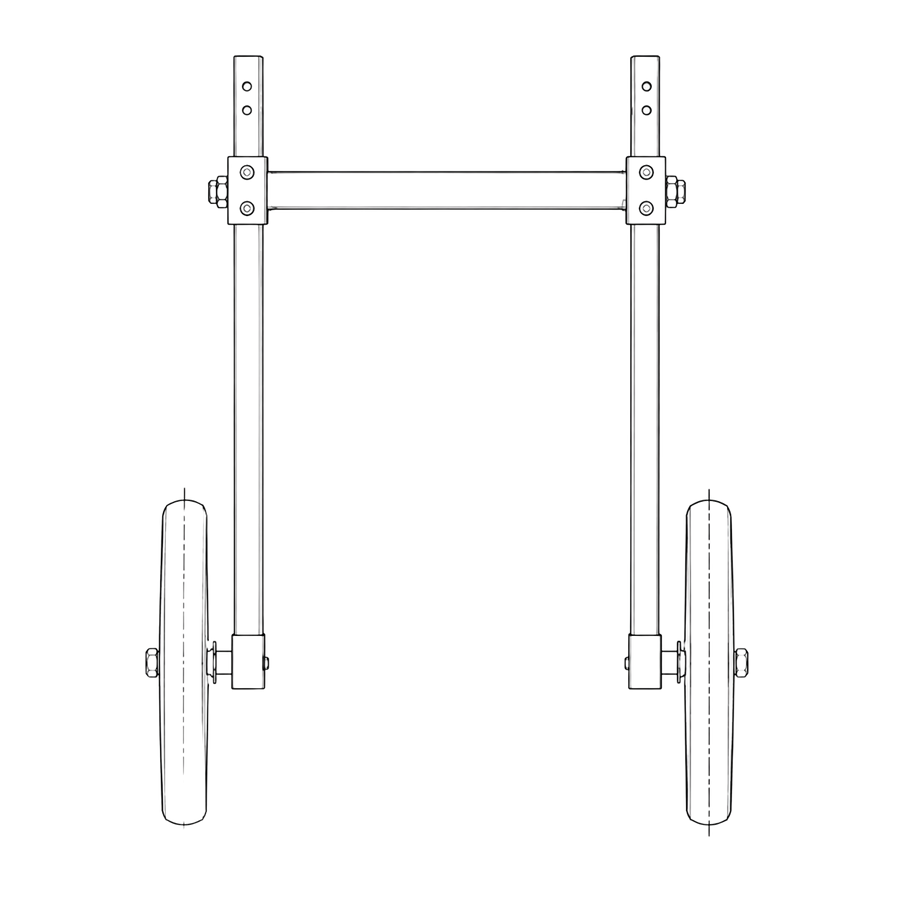
Narrow stance
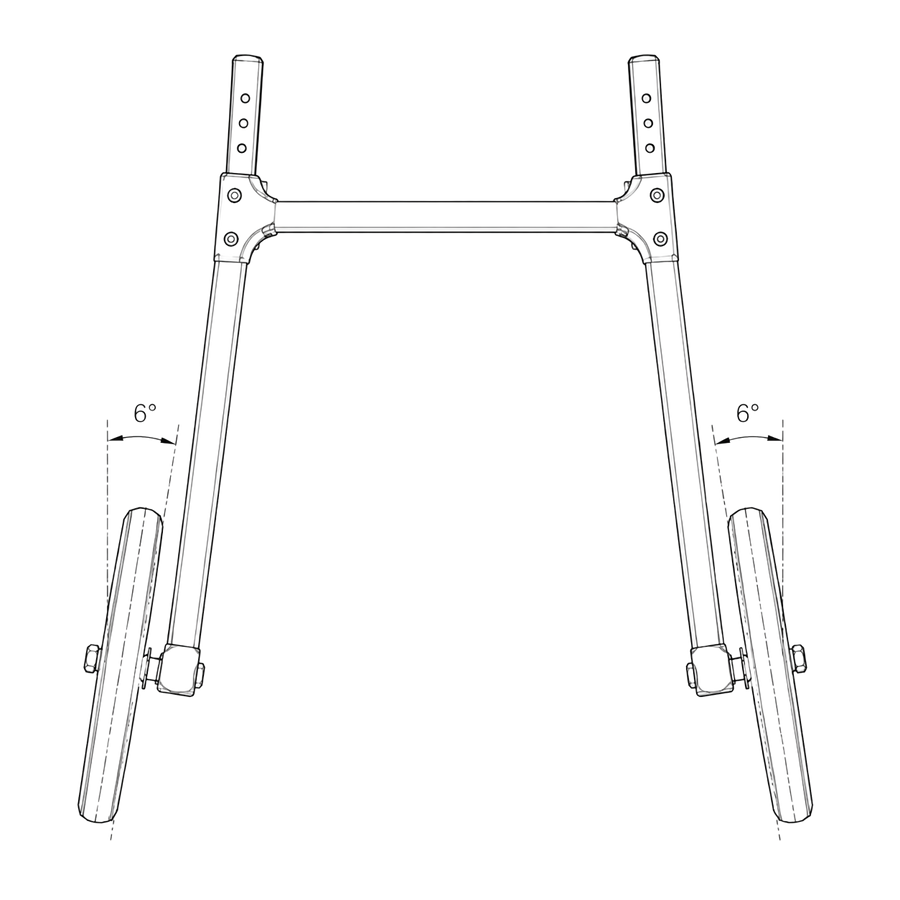
20% wider stance
₹5,000 to ₹10,000
Too fragile or too heavy
May cause sores and rashes
No spares, hard to adjust


₹12,990
View the wheelchair →₹40,000 to ₹60,000
3 to 4x the price
Spares are slow and costly
No custom nameplate
Price ranges are indicative, from publicly listed prices as of August 2026. The 20% wider stance is measured between our own frame and a straight-wheel frame of the same size.
Tap the ones you need and we will build those first.
Thanks, we will tell you first.
Nothing here is on sale yet and tapping does not commit you to anything. It only tells us what to make first.
Nothing in here yet. The zoomies are waiting!
Shop mobility aids